Sustainable Synergy: Bridging Energy Audit, Environment Sustainable Design, Efficiency & Accounting - 12 August 2026
Revolutionizing HVAC:
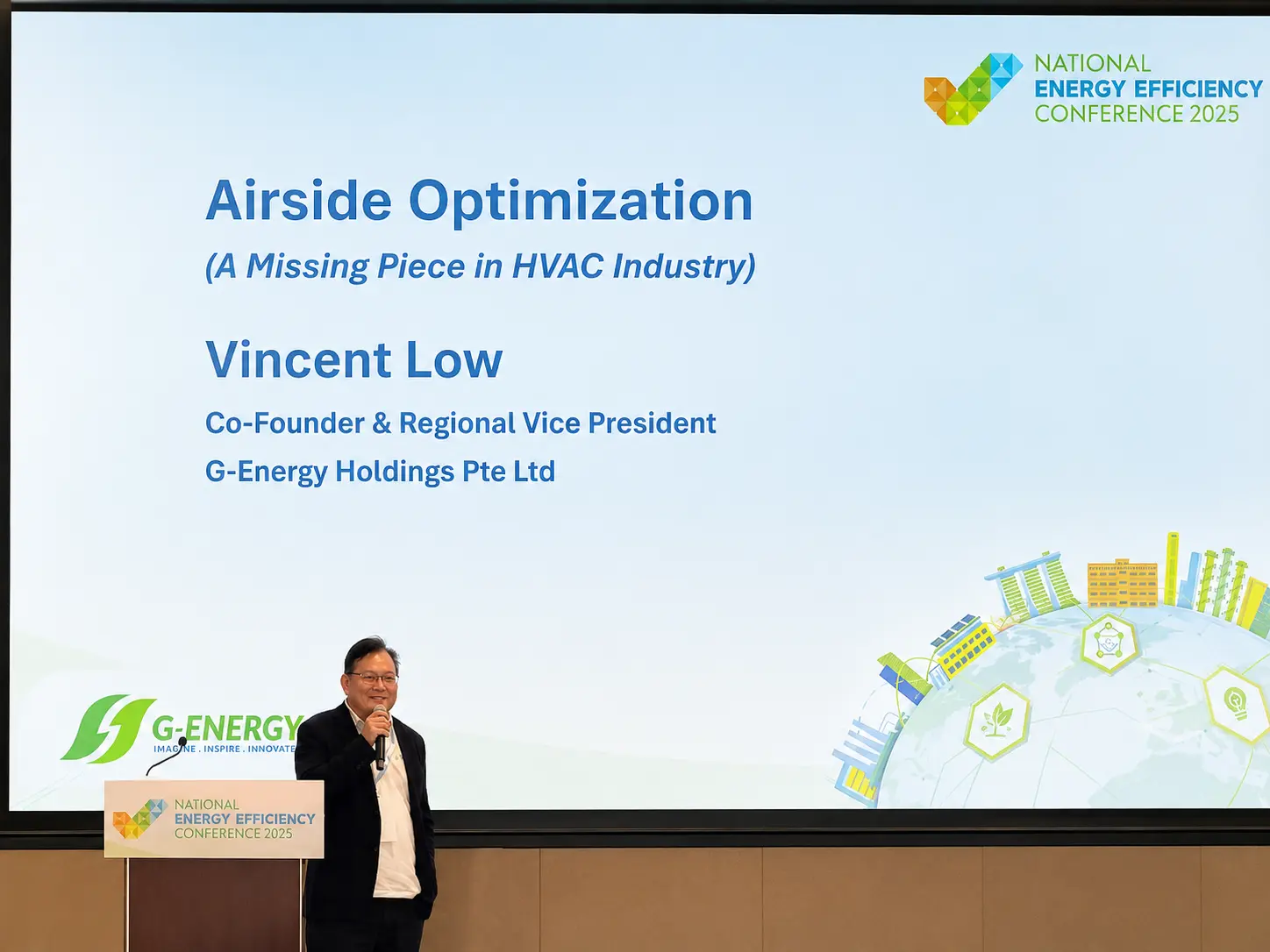
Seamless Integration, Intelligent Automation, and Proven Energy Savings” explores how HVAC and chiller plant systems can be designed, optimized, automated, and verified to improve energy performance and operational reliability. The presentation covers air- and water-cooled systems, AHU and chiller plant design, automation, energy efficiency optimization, Measurement & Verification (M&V) and accounting.
How Energy Audit → Energy Efficiency → ESD → Accounting are connected
Think of the green industry as a value chain:
Energy Audit → Energy Efficiency → Environmental Sustainability Design → Accounting → Business Value
Energy Audit — Find the problem.
Measure energy consumption, system performance and efficiency, identify energy-saving opportunities and establish a baseline.
Energy Efficiency — Solve the problem.
Implement optimization such as chiller sequencing, pump and fan control, setpoint optimization and automation. The presentation specifically highlights reducing kW/ton and using real-time performance data.
Environmental Sustainability Design (ESD) — Design sustainability into the building.
Energy efficiency becomes part of the wider building strategy: reducing energy consumption, carbon emissions, resource consumption and improving green-building performance.
Accounting — Translate technical performance into financial performance.
Energy savings become RM savings, operating-cost reduction, CAPEX justification, ROI, payback and asset value. The presentation already connects retrofit decisions with budgets, annual savings and ROI—for example, comparing different retrofit strategies against investment budgets and payback requirements.
Green transformation is not only about saving kWh, it is about connecting energy, carbon, engineering and financial performance.
Energy auditors measure it.
Energy-efficiency engineers improve it.
ESD professionals make it sustainable.
Accountants quantify its financial value.
Management turns it into business decisions.